openQCM Store Talk with us
02 / Instruments · Six configurations · One open architecture

The openQCMinstrument family.

Three benchtop instruments, embedded and OEM modules, and a vacuum sensor holder. One open architecture, scaled to the question being asked.

Illustrative resonance spectrum · widths not to scale · Crystal Sweep · multi-overtone acquisition · Δf + ΔD · ±0.01 °C
Benchtop
Embedded, OEM & holder

NEXT resolves five overtones with dissipation, under closed-loop thermal control at ±0.01 °C.

See NEXT
Frequency + dissipationOpen hardware · Open softwareNovaetech · Pompeii, Italy · since 2014
01 / From the bench

One crystal.
Three ways to read it.

One shared principle.
Three distinct instruments.Choose a perspective below.

More than one viewFrequency. Dissipation. Temperature control.
Three instruments.
Choose what you need to see.

See the experiment
from more than one angle.

Explore frequency and dissipation across the available overtones, with active thermal control. NEXT brings more perspectives to the same surface.

  • ReadoutFrequency + dissipation
  • AcquisitionMultiple overtones
  • TemperatureActive control
Open the NEXT page
02 / Embedded & OEM

Off the bench.

The same open QCM core, taken where a benchtop instrument can't go: embedded modules, differential OEM boards and vacuum-ready holders.

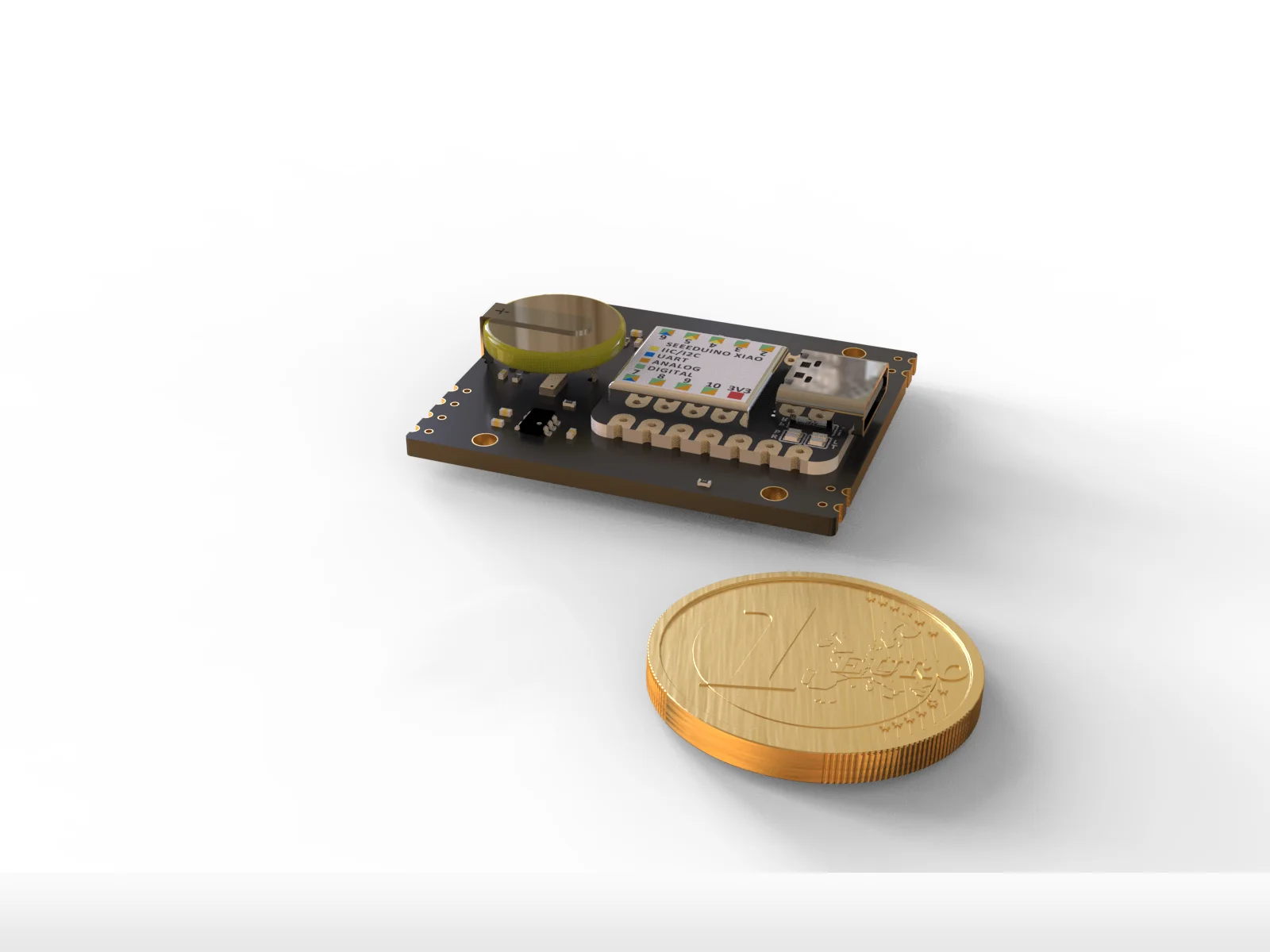
openQCM SpaceBug embedded QCM module next to a coin
04 / Embedded

openQCM SpaceBug

Ultra-compact, ultra-low-power QCM module.

A 7-gram QCM module for CubeSat-class payloads and battery-powered systems. Frequency, time and temperature logged on board where footprint and energy budget are tight.

Modes
Frequency
Weight
7 g
Deep sleep
28.5 µA
Mount
Castellated
Open the SpaceBug page
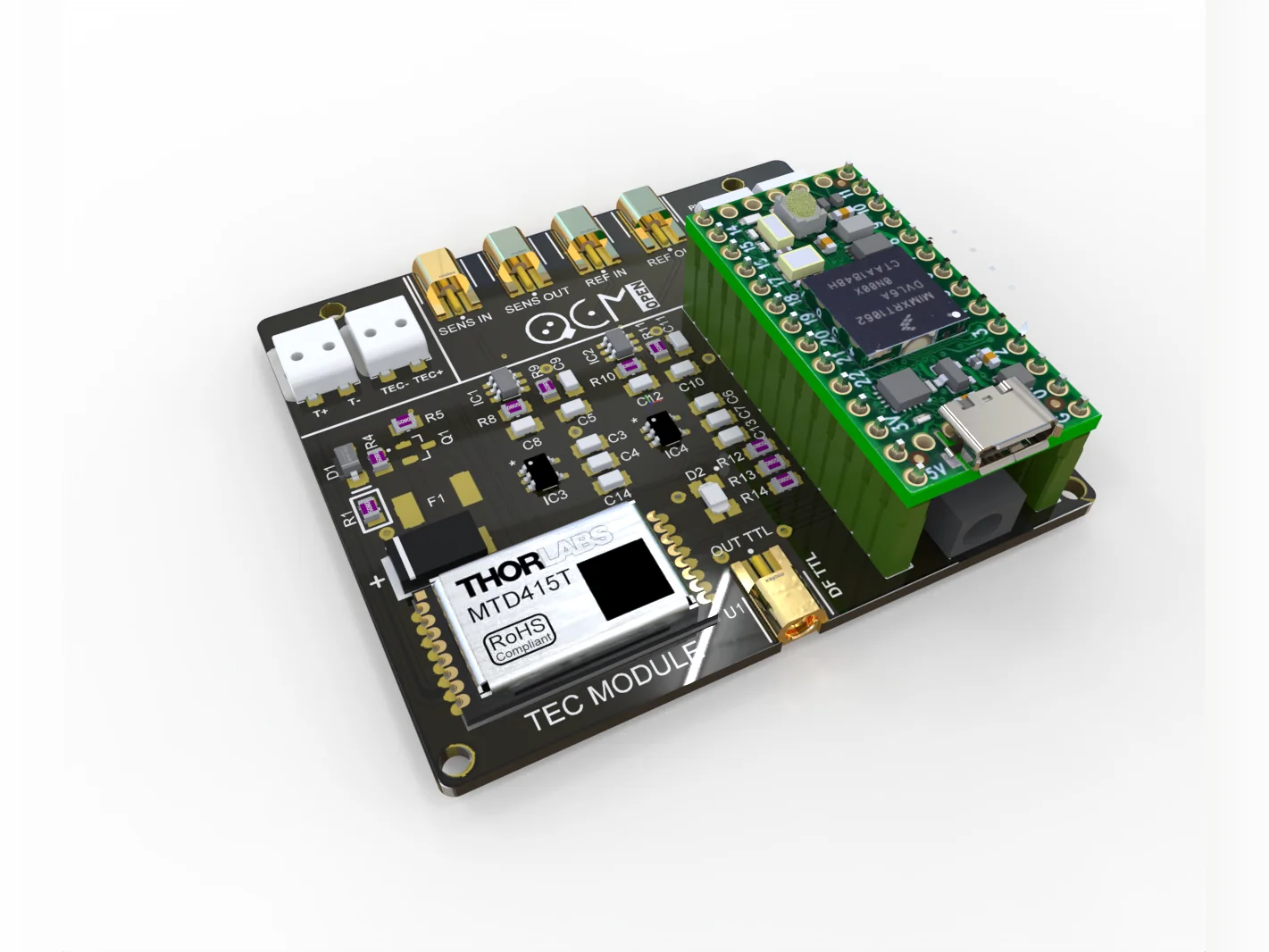
openQCM TWIN dual-crystal OEM board
05 / OEM

openQCM TWIN

Dual-crystal differential QCM for gas & vacuum.

Two crystals, one sensing and one reference, on an OEM board. Differential readout cancels common-mode drift for gas-phase and vacuum work.

Modes
Differential Δf
Crystals
2 · ref + sensor
Thermal
MTD415T
Environment
Gas & vacuum
Open the TWIN page
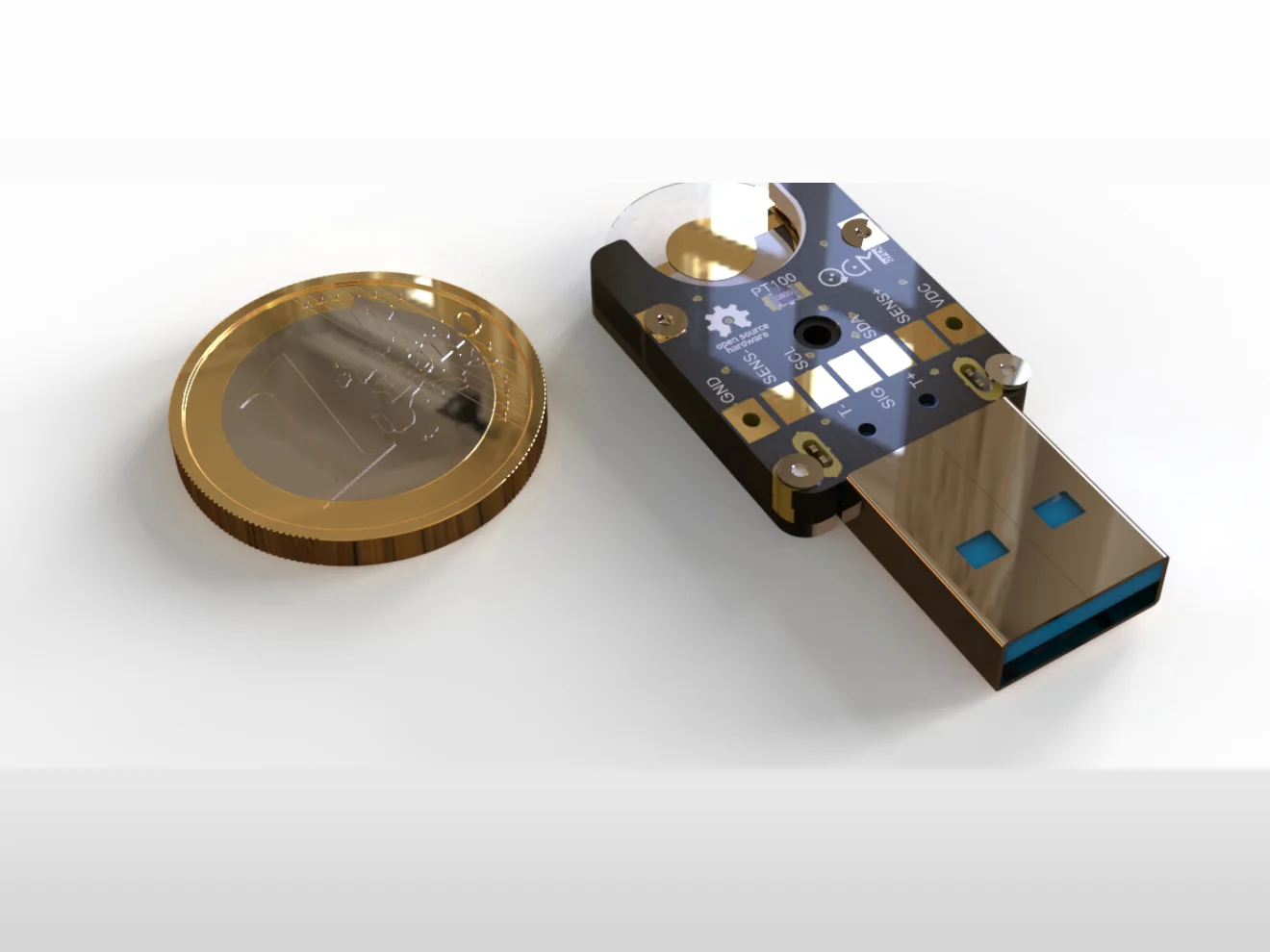
openQCM Holder vacuum-compatible sensor holder next to a coin
06 / Vacuum

openQCM Holder

All-FR-4 QCM sensor holder, vacuum-compatible.

A sub-5-gram all-FR-4 sensor holder built for vacuum chambers. No plastic housing, USB or solder-pad connection, 1–10 MHz crystals.

Modes
Frequency
Weight
< 5 g
Profile
4 mm
Environment
Vacuum
Open the Holder page
03 / Compare

What each instrument can do.

The three benchtop instruments, side by side, picked by capability rather than hierarchy. The embedded and OEM line (SpaceBug, TWIN, Holder) is specified on each device's own page.

CapabilityWi2 Q-1 NEXT flagship
Frequency Δf●●●
Dissipation ΔD○●●
Overtones—one at a time · n ≤ 9all, ~9 s per five-overtone cycle · n ≤ 9 (9th beta)
Thermal control——±0.01 °C
Wirelessready (expansion header)——
Electrochemistry module—optprototype
Optical module——●
Pipetting module——●
Softwareopenopenopen
Schematicsopenopenopen

Overtone range: up to n = 9 with 5 MHz crystals, up to n = 5 with 10 MHz crystals. Q-1 sweeps one selected overtone at a time; NEXT sweeps all of them in sequence in every cycle, about 9 s for all five overtones.

04 / How to choose

Match the question to the instrument.

A 30-second heuristic. If in doubt, run the calculator with your expected Δm and it will recommend a configuration.

  1. 01 / Wi2

    You need to track mass uptake in real time.

    Single-channel Δf at 5 or 10 MHz is enough. Portable, USB-powered, hands-off acquisition.

    Wi2 page
  2. 02 / Wi2

    You teach QCM in an undergraduate lab.

    The lowest barrier to entry, open firmware to peek inside, and a price that scales to a classroom.

    Wi2 page
  3. 03 / Q-1

    Your film is soft, swollen, or viscoelastic.

    You need dissipation. Q-1 gives you Δf and ΔD on one selected overtone at a time, the standard QCM-D measurement.

    Q-1 page
  4. 04 / Q-1

    You run a benchtop flow-cell setup.

    Modular fluidics, drift-stable acquisition, clean interface to your existing pump and tubing.

    Q-1 page
  5. 05 / NEXT

    You need to fit a viscoelastic model.

    You need every overtone in each cycle (about 9 s for all five), not one selected overtone at a time. NEXT resolves up to n = 9 on a 5 MHz crystal (n = 5 on 10 MHz), with dissipation.

    NEXT page
  6. 06 / NEXT

    Your experiment is temperature-sensitive.

    Closed-loop Peltier control to ±0.01 °C. Combine with EC or optical modules for coupled measurements.

    NEXT page
  7. 07 / SpaceBug

    You're embedding QCM in a satellite or field node.

    7 grams, 28.5 µA deep sleep (power LED removed), castellated mount. Frequency logging where space and power are scarce.

    SpaceBug page
  8. 08 / TWIN

    You measure in gas or vacuum and fight drift.

    A dual-crystal differential board: a reference crystal cancels common-mode drift, with onboard thermal control.

    TWIN page
  9. 09 / Holder

    You need a QCM sensor inside a vacuum chamber.

    An all-FR-4 holder under 5 g, 4 mm thin, no plastic housing. USB or solder-pad connection, 1–10 MHz crystals.

    Holder page
05 / Heritage

Where it all began.

openQCM (2014) was our first instrument, the open-source quartz crystal microbalance that started the project. It is no longer in production, but its design, electronics and software remain open for reference.

The original openQCM quartz crystal microbalance, 2014
Heritage · 2014

The original openQCM

A truly plug-and-play, open-source QCM. Arduino-based, 1–10 MHz, operating in liquid, air or vacuum. Discontinued, kept online for the community.

Visit the openQCM page
06 / Talk with us

Not sure? Ask us.

Tell us the measurement you want to make. We'll tell you which openQCM is right, or recommend a different technique altogether if QCM isn't the answer.

Colophon

Explore. Measure.
Publish. Repeat.

openQCM is a brand of Novaetech S.r.l. · Open hardware since 2014 · © 2026 · Cookies & Privacy Policy · Images CC BY-NC-SA 4.0, commercial use: ask us